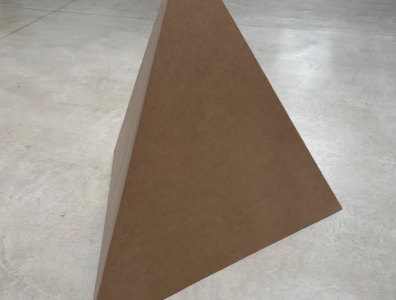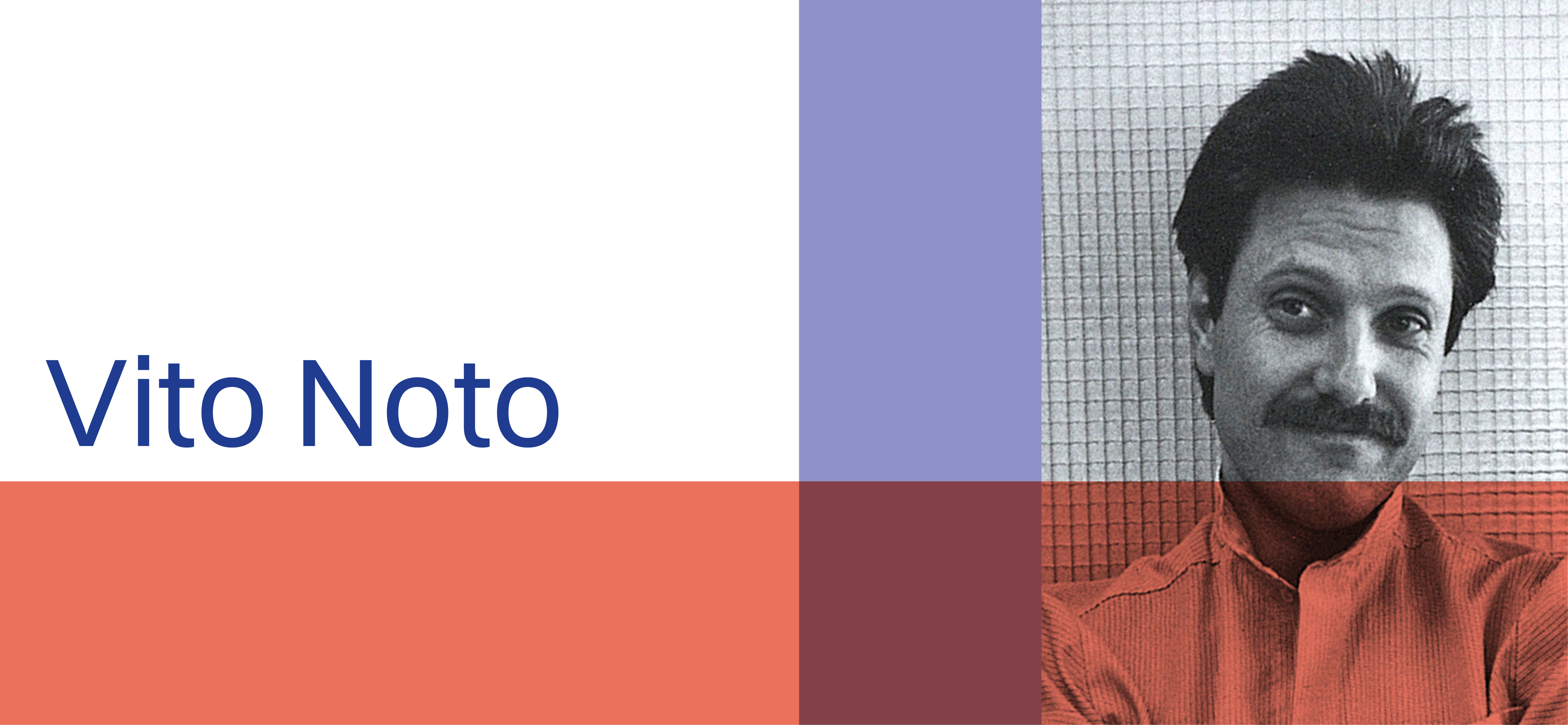
Vito Noto’s primary field of activity is industrial design. However, as a designer, Noto also applies an established method to investigate (sometimes above all) the perceptual, visual and communicative aspects of objects and production processes. The form therefore has to take account of constructional and functional factors, but also the codification of identity systems (for the product and the manufacturer), as well as information, communication and safety devices for the user or worker. The complexity of design, according to Vito Noto, therefore moves from a much more highly articulated path, where morphology is the ultimate result of a wide spectrum of inputs and questions posed to the project with surprising results, where colour, shape and ergonomics achieve a synthesis. Vito Noto has donated his whole archive, consisting of over ten thousand items, many of them models and prototypes as well as a large number of books, to the m.a.x. museo.
Vito Noto was born in Ragusa, Sicily, in 1955. At the age of three he emigrated to Switzerland, in Emmental, near Lucerne, and later to Canton Ticino, where he began his studies as a building draughtsman at the Dolf Schnebli e Associati office. He enrolled at the Scuola Politecnica del Design in Milan, directed by Nino Di Salvatore, a member of the Movimento per l’Arte Concreta (MAC). In 1974, he began his studies in industrial design. Among renowned Italian designers, his teachers included Alberto Rosselli, Isao Hosoe, Narciso Silvestrini, Bruno Munari, Max Huber, Achille Castiglioni, Bob Noorda and Gillo Dorfles. After completing his studies, in 1976 he embarked on a long journey to India. In the following years he moved to Paris to set up the business in 1979 for Endt-Fulton Partner. In 1982 he moved permanently to Ticino, where he opened his own studio at Cadro and started working for large Swiss and international companies. In 1984 WMF commissioned him to develop a new concept of a laid table for the advent of the new millennium, the result of which led to the design of his “Cono” centrepiece. In the mid-eighties he began collaborating with Hamilton, designing products in the labo-medical fields until 2008. The vertical storage cabinet “Listamat”, for the Lista company, received a prize at the IF Industrie Forum Design Hannover in 1990. In 1988 Vito Noto was included in the second index drawn up by the SID (Società Italiana Design). At the same time, he began to take an interest in new artistic languages. He devoted himself to the production of wall clocks, founding the Perditempo brand®, for which he developed alternative concepts for indicating the time, such as timepieces with hands that slide backwards, dials that indicate 24 hours or fitted with a single hand. In these years, various of his projects were nominated for the Compasso d’Oro Award. In 1995 Vito Noto was awarded the Design Preis Schweiz for the “F.A.M.E.” project, a micro-laboratory designed for Hamilton. Numerous collaborations also characterised the second half of the nineties and the early following years – in terms of machinery and corporate image – including with ABA Almedica, Stäubli, Eisen (for which he developed, among others, the models “Tetraedro”, “Wow” and “Trendy”), and Stäubli Schönherr. In 2005, he started to design postage stamps for Swiss Post and Liechtenstein. In 2006 he was included in the shortlist of the 25 Swiss designers published in the volume DESIGNsuisse, edited by SRG SSR idée suisse in collaboration with Hochparterre. Between 2007 and 2009, in partnership with Swiss Post, Pro Patria and the ViaStoria foundation of the University of Bern, he produced three series devoted to Swiss Cultural Routes each year. In 2011, the six postal values for the Principality of Liechtenstein entitled “Alter-native energies” were named one of the world’s top 10 stamps. In 2020 he received the Golden A’Design Awards for the twenty-four-hour “Day/Night” wristwatch by Perditempo and the “Piro” bioethanol fireplace. Vito Noto lives in Cadro, where he has his studio.
Works by the author in institutional collections: Museum für Gestaltung Zürich; Archivio AIAP, Milan; Centro Internazionale d’Arte e Grafica CIAG, Chiasso.